

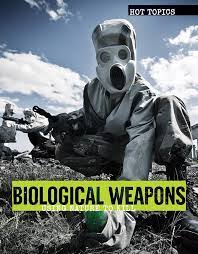
A Brief but Shocking Story of Bio-war and Bio-weapons
Introduction
Throughout human history, warfare has evolved through innovations in tools, strategies, and technology. Among the most insidious of these advancements is biological warfare (biowar)—the use of pathogens or toxins to cause illness or death. Unlike conventional weapons that destroy through force, bioweapons exploit the invisible realm of microbes to disrupt societies, economies, and ecosystems. Although this form of warfare is not new, its scientific underpinnings and potential for catastrophe have become more prominent in the 20th and 21st centuries. This blog traces the historical evolution of biowar, examining its origins, development, and implications for modern society.
1. Ancient and Medieval Roots
Biological warfare is as old as war itself. Long before the discovery of microbes, early civilizations used disease-causing materials to weaken enemies.
Early Incidents:
- Assyrians and Hittites (1200–600 BCE): Poisoned enemy wells with toxic rye or decaying carcasses.
- Scythians (4th Century BCE): Used arrows dipped in decomposing matter and blood to increase lethality.
- Romans and Greeks: Employed dead animals and infected materials to contaminate water supplies or spread fear.
One infamous case was the Siege of Caffa in 1346, where Mongols are believed to have hurled plague-infected bodies into the besieged city—possibly initiating the Black Death in Europe.
2. Scientific Discovery and the Rise of Modern Bioweapons
The discovery of microbes by Pasteur and Koch in the 19th century laid the foundation for laboratory-based biological weaponry.
World War I:
- Germany allegedly infected enemy livestock with glanders and anthrax.
- Biological weapons remained limited due to technological constraints.
World War II:
- Japan’s Unit 731 conducted horrific human experiments in Manchuria, exposing victims to plague, typhoid, and cholera.
- Allied powers also developed biological agents, including anthrax and botulinum toxin.
The weapons were rarely used in battle but created vast repositories of pathogens with military potential.
3. The Cold War and the Secret Biological Arms Race
Biological warfare escalated during the Cold War, driven by secrecy and superpower rivalry.
United States:
- Operated Fort Detrick, where agents like Q fever, brucellosis, and tularemia were weaponized.
Soviet Union:
- Ran Biopreparat, a covert program producing enhanced versions of anthrax, plague, smallpox, and even Ebola-like viruses.
- The 1979 Sverdlovsk anthrax leak exposed the scale of Soviet activities, killing dozens and shocking the world.
4. Biological Weapons Convention (BWC)
In 1972, more than 180 countries signed the BWC, agreeing to:
- Prohibit production and stockpiling of biological weapons.
- Commit to peaceful scientific exchange.
- Unfortunately, the treaty lacks an effective enforcement mechanism, making clandestine programs difficult to verify.
Despite the BWC, countries like Iraq, North Korea, and Syria have been accused of violating its terms.
5. Bioterrorism and Non-State Actors
The democratization of biotechnology has created new dangers from non-state actors:
- 2001 Anthrax Attacks in the U.S.: Five people were killed, and panic gripped the nation.
- Aum Shinrikyo (Japan): The cult attempted to spread botulinum and anthrax in Tokyo in the 1990s.
- Terrorist groups have shown interest in acquiring or engineering pathogens.
Bioterrorism differs from state-sponsored warfare by its unpredictability and often poor containment mechanisms, potentially leading to global epidemics.
6. Genetic Engineering and the Dual-Use Dilemma
Modern biotechnology, especially CRISPR and synthetic biology, presents new ethical and security challenges.
Dual-Use Research of Concern (DURC):
- Medical research into influenza, coronaviruses, and pox viruses can be repurposed for military or terrorist use.
- In 2011, researchers modified H5N1 bird flu to be airborne between mammals, raising questions about publication ethics and biosecurity.
Some theorists even discuss ethnically targeted bioweapons, which could theoretically exploit genetic differences. Though no such weapon has been verified, the concept highlights the dystopian potential of genetic manipulation in warfare.
7. COVID-19: A Modern Cautionary Tale
Though SARS-CoV-2 is widely considered a natural virus, its global impact mimics what a deliberate biological attack might cause:
- Global supply chain collapse
- Panic, misinformation, and geopolitical blame games
- Strain on healthcare infrastructure
- Disruption to economies and education
The pandemic has spurred calls for stronger laboratory safety, international transparency, and pandemic response strategies that could also double as biowar defenses.
Conclusion: From Ancient Toxins to Synthetic Pathogens
The story of biowar is a disturbing mirror of human ingenuity—where progress in biology is coupled with potential for destruction. From plague-ridden arrows to genetically enhanced viruses, biological warfare has evolved from a primitive tactic into a high-tech threat that endangers all of humanity.
To prevent a catastrophic future, nations must:
- Reinforce treaties like the Biological Weapons Convention
- Improve biosurveillance and public health systems
- Encourage bioethics education and international cooperation
- Monitor dual-use research with global oversight
Understanding the origin of biowar and bioweapons is crucial—not just for historians or scientists, but for every global citizen invested in peace, security, and survival.
Recommended Reading: Key Books on Biowar and Bioweapons
- Germ Warfare: The Truth About Biological Weapons – Jeanne Guillemin
An accessible yet comprehensive account of the origins, development, and ethics of bioweapons. - Unit 731: Testimony – Hal Gold
A harrowing compilation of interviews and evidence documenting Japan’s World War II biowarfare program. - Biohazard – Ken Alibek
First-hand account from a former Soviet scientist detailing the USSR’s massive and secretive bioweapons programs. - Deadly Cultures: Biological Weapons Since 1945 – Mark Wheelis, Malcolm Dando, Lajos Rózsa
A scholarly anthology exploring post-WWII biowarfare developments and international policy responses. - The Biology of Doom: America’s Secret Germ Warfare Project – Ed Regis
Chronicles the U.S. biowarfare efforts from World War II through the Cold War and beyond. - The Demon in the Freezer – Richard Preston
A gripping narrative about smallpox and anthrax, blending science journalism with thriller-like urgency. - Biotechnology and Biosecurity: Exploring the Boundaries – David P. Fidler
Offers critical insights into the ethical, legal, and global security challenges posed by modern biotech.